
USM Psychology Dept. Bolsters PDL Resilience with 2nd Round of Mental Health Workshop
April 22, 2026
Bionihan Continues Mission, Holds Workshop for Columbio’s Future Biodiversity Plan
April 23, 2026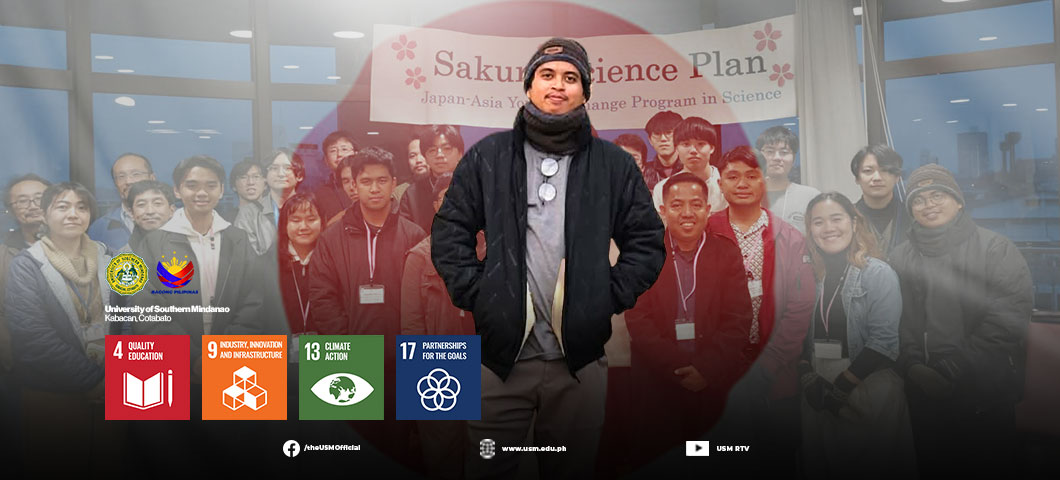
Miles Angelo Sodejana, a 4th year BS Physics student at the University of Southern Mindanao, recently returned to the Philippines from his Sakura Science Exchange Program at Okayama University, Japan.
A fully funded initiative, Sakura Science Exchange Program offers students the opportunity to engage in hands-on physics experiments and academic exchange at Okayama University that are intended for BS Physics and BS Applied Physics students from the Philippines Universities.
According to Sodejana, he enjoyed the seven-day stay in Japan, where he took part in various experiments with his groupmates as part of the program.
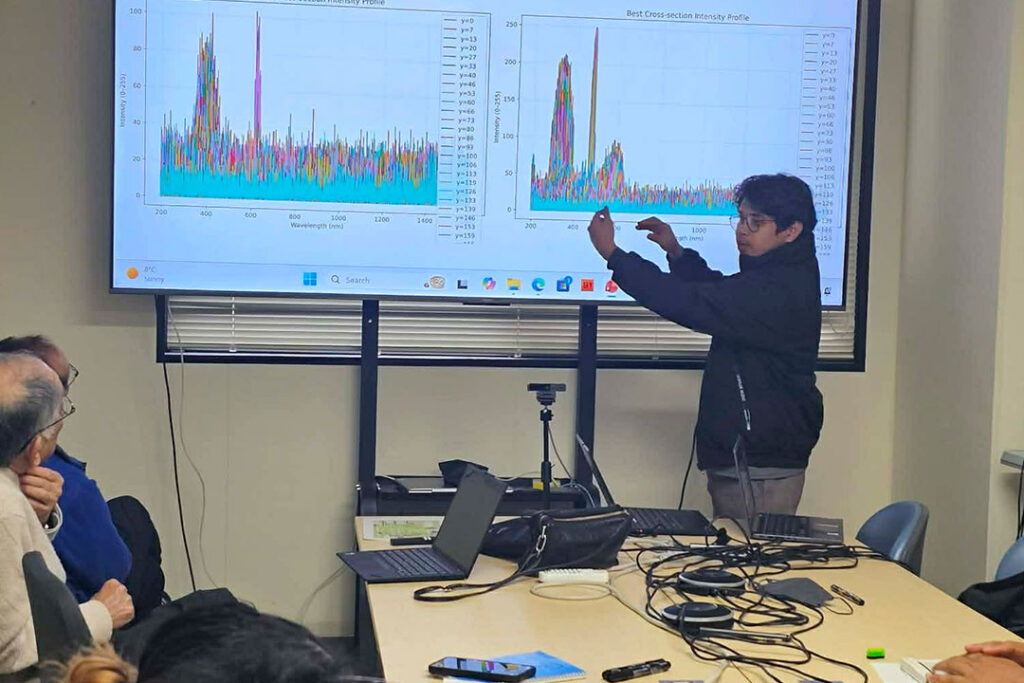
The activities included: (1) construction of a spectroscope and observation of spectral lines, (2) construction of a light-emitting diode circuit and measurement of Planck’s constant, (3) construction of a readout circuit for a light sensor, (4) observation of single photons (light quanta), (5) laser oscillation and double-slit interference experiment, and (6) interference experiment with single photons.
They also attended a lecture and problem-solving session on the double-slit experiment, which focused on wave interference and fringe formation. Moreover, they carried out a spectroscopy experiment by building and using a spectroscope to observe spectral lines from different light sources. This showed that different elements emit distinct wavelengths of light, reinforcing the idea of quantized energy levels.
He also shared that they had a laboratory tour of an advanced research facility, where discussions covered studies on the electron dipole moment and thorium-229 isotopes.
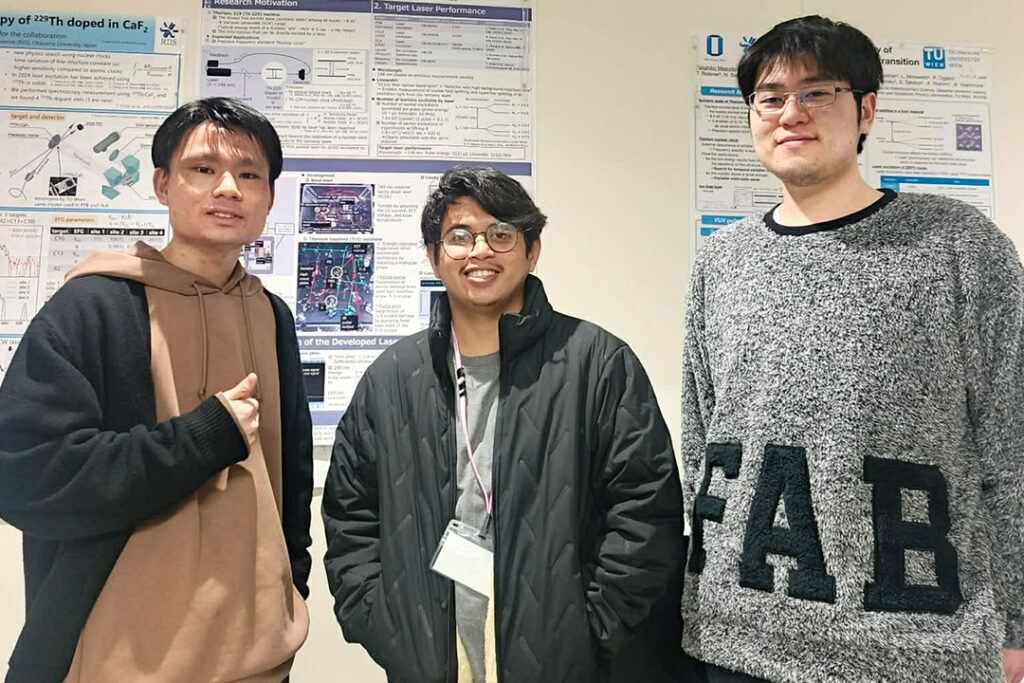
In an interview with the University Public Relations and Information Office (UPRIO), Sodejana highlighted that SPring-8is the facility in Okayama that left a strong impression on him. It is a massive synchrotron radiation facility, equipped with a 1.436-kilometer accelerator. Research conducted there goes beyond physics, extending into biology, chemistry, materials science, and even Earth science.
“What amazed me,” he said, “is that I’ve always known accelerators are important in understanding the fundamental structure of the universe, like what CERN has been doing. But I didn’t realize they could also be used for more practical science, like studying protein structures.”
Furthermore, when asked how the experience changed him as a student and as a person, Sodejana said it gave him hope. For him, physics is not yet widely appreciated in the Philippines, but he felt fortunate to have worked with people who are as passionate—if not more passionate—than him in the field of physics, especially among fellow students from Mindanao.
“I saw how my colleagues fixated on our lab activities, I saw how they worked hard, I saw how they went beyond our lab activities and did other things for the sake of curiosity, and it made me feel that people can still love physics more than what is required by grades and standard instructions,” he emphasized.
“It taught me that the world is big, and even if you might feel isolated at the moment, you will meet your people someday if you simply keep doing what you love to do,” he remarked.
Before the end of the interview, Sodejana shared his biggest takeaways in the exchange program:
“There are different sides of being a physicist, from experimental to theoretical to computational, but whichever part of spectrum you belong to, you have passion as your common ground. Everything is beautiful when you spend enough time understanding and working on it.”
Sodejana said that his overall experience in Japan was incredibly fulfilling. He said he went there for science and he came back home feeling renewed.
“I love Japan, from the small streets to the crowded cities to the cultural places,” Sodejana spoke.
Meanwhile, Sodejana also shared words of inspiration for students who hope to apply for similar international programs. He encouraged them to never reject themselves before even trying.
“I talked to some of my juniors about this, and sometimes they tell me that the reason they don’t try to join or participate in these kinds of endeavors is that they’re afraid they won’t make it. You can’t help that if you indeed won’t make it, but please let the program decide that, not you. Best case scenario is that you’ll get accepted, worst case is that you’ll learn,” he explained.
For him, not getting accepted is not a sign of incapability. Instead, it may simply mean that there are better opportunities suited for them elsewhere. He reminded students to keep trying and never reject themselves.
Aside from his physics experiences and learnings in Japan, Sodejana also highlighted how much he appreciated the country’s culture. He observed that Japanese people are very polite and disciplined. He was also impressed by the very clean streets, the strict observance of traffic rules, and the quiet atmosphere in public places. He added that the food was excellent, and many of the people he met along the streets would greet him warmly.
“I love how our professor, Professor Sasao and Yoshimura, including their research assistants, treated and assisted us in our activities, and I especially appreciate Ms. Miyuki Hatta for always being there whenever we needed her,” Sodejana shared.
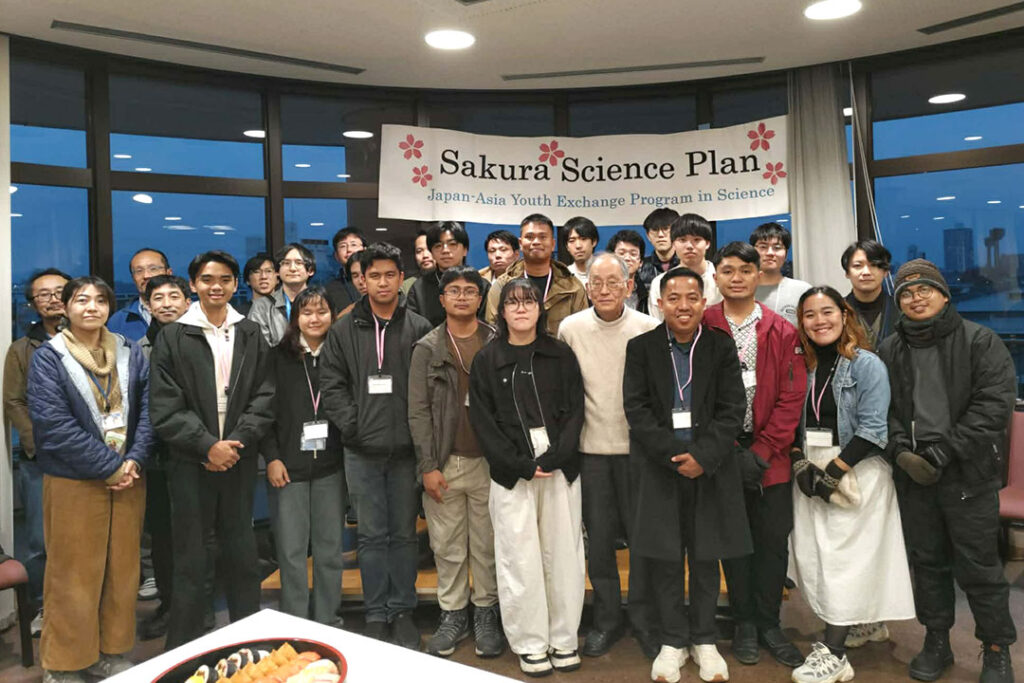
Sodejana conveyed his gratitude to the individuals and groups who made his participation in the program possible. He first acknowledged everyone involved in the initiative, particularly the Mindanao group who worked closely with their Japanese counterparts. He extended special thanks to Professor Sasao, Yoshimura, and Ms. Miyuki Hatta for selecting them to be part of what he described as a meaningful and enriching experience.
He also expressed deep appreciation to his friends who provided him with financial support. Despite the program being fully funded, Sodejana shared that he encountered financial constraints while completing the necessary requirements prior to departure. At the time, he was undertaking his internship at UP Diliman and lacked the resources to cover expenses such as visa processing and roundtrip airfare. He credited his friends, particularly those from the BS Chemistry program who lent him money, for helping him meet these requirements and ultimately proceed with the trip.
Moreover, Sodejana recognized several individuals who assisted him in securing his clearance, including Sir Bjan Arellano, Dr. Jelly Grace Nonesa, and Sir Bryan Betaña from USMIRO. He emphasized that their support was instrumental in enabling him to successfully pass through immigration.
Overall, Sodejana underscored that his experience was made possible through the collective support and generosity of those who stood behind him.