
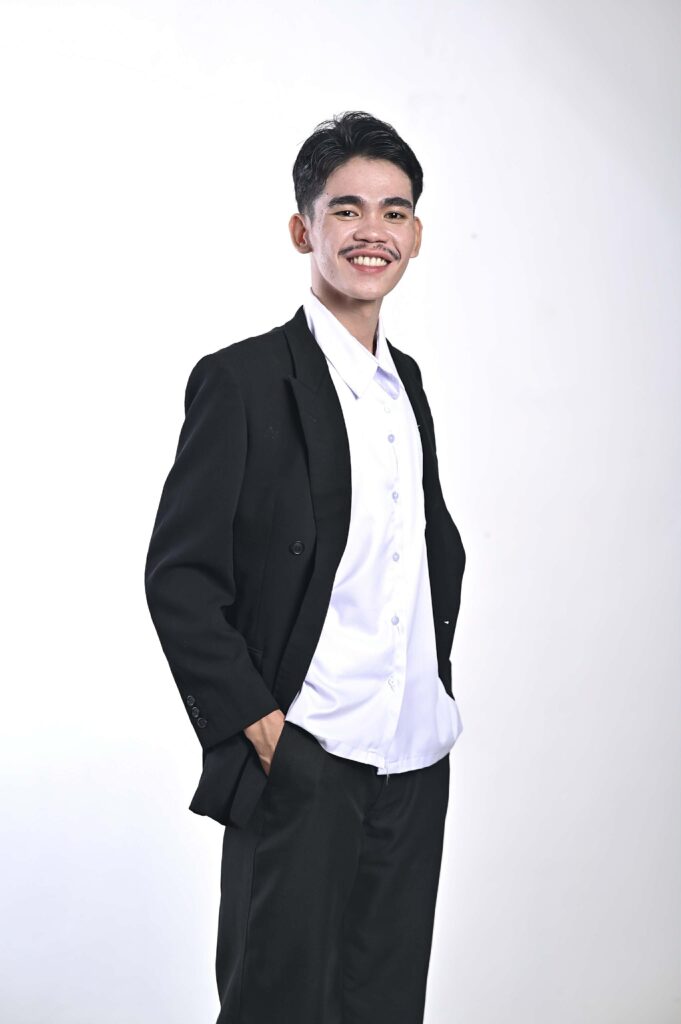
Muhajar D. Samad
LAKAS PARTY
President
Life is never fair, but despite such fact, never be a cause or a source of injustice that harms people.
Platforms
- USG INTERNAL REORGANIZATION
Transitioning from a centralized government model toward a more collaborative, multisectoral network.- A. USDC Integration
Institutionalize the University Student Development Council (USDC) as the primary consultative body. This ensures that the USG does not operate in isolation but rather works in coordination with sectoral student leaders and college representatives. - B. Sectoral Senator Empowerment
Grant Sectoral Senators direct voting power and guaranteed representation in both Senate and Executive planning processes to ensure inclusivity across all sectors.
- A. USDC Integration
- ONE VISION
Focused on strengthening connections and unity among the USG, ASG, LSG, and other campus organizations.- A. The Presidential “Link-Up” (Satellite Campus Visitations)
Institutionalize per-semester visitations by the USG President to all USM satellite campuses. This ensures that students outside the main campus have direct engagement with their leaders—allowing them to raise concerns, receive updates, and feel integrated into the “One Vision” agenda. - B. Bridging USM Main and Satellite Campuses
Strengthen coordination and cohesion among the USG, ASG, LSG, and other campus groups to promote a unified student governance system. - C. Quarterly Inter-Council Summits
Conduct regular meetings between the USG and local student leaders to exchange best practices, align advocacy priorities, and ensure that grassroots concerns are elevated to the highest levels of student governance.
- A. The Presidential “Link-Up” (Satellite Campus Visitations)
- THE “INCLUSIVE CAMPUS” INITIATIVE
Building upon existing programs, this pillar aims to make USM a welcoming environment for every student, regardless of background or belief.- A. Cultural Support
Institutionalize partnerships between the USG and sectoral organizations (e.g., USMMUSA) for major cultural and religious observances. This ensures consistent funding and recognition, independent of the discretion of future administrations. - B. Safe Space Policy
Develop a joint resolution among LSGs to enhance campus facilities dedicated to prayer, meditation, and quiet study across all colleges. - C. Monthly Awareness Campaigns
Institutionalize a Monthly Awareness Calendar to educate and empower the student body on critical issues such as mental health, HIV awareness, voter education, gender equality, human rights, and student rights. Each month will feature a dedicated theme led by the USG in collaboration with relevant Sectoral Senators. - D. USG “Kalinga” Volunteer Program (Cash-for-Work)
Establish a Student Labor Pool for university events. In partnership with the administration, the USG will prioritize hiring underprivileged students, providing stipends or “cash-for-work” incentives. This initiative promotes volunteerism while offering financial support to students in need.
- A. Cultural Support
- RESPONSIVE GOVERNANCE AND TRANSPARENCY
This pillar seeks to make the USG more accessible, particularly to students who may feel disconnected from governance processes.- A. Digital USG Resolution Tracker
Develop an online dashboard that allows students to monitor the status of all USG resolutions—from drafting to implementation—thereby ensuring transparency and accountability. - B. USG Grassroots Legislative Consultations
Conduct regular, informal consultations across colleges to gather grassroots input prior to drafting new policies.
- A. Digital USG Resolution Tracker
- THE “GREENER USM” (SUSTAINABILITY AND CAMPUS ECOLOGY)
- A. Institutionalization of Green USM
Establish Green USM as the official Animal Welfare and Environmental Initiative Program of the USG. This transforms it from a term-based project into a permanent institutional mandate, ensuring dedicated budget allocation and a standing committee for campus ecology. - B. Waste-to-Resource Program
Implement a project where organic waste from cafeterias and canteens is converted into vermicompost by agriculture students. In partnership with the College of Agriculture, the USG will provide logistical support (e.g., bins and collection systems), while students manage processing as part of their fieldwork, earning laboratory credits. - C. “Sustainable Student” Certification
Collaborate with the administration to introduce a sustainability certification for student organizations. Organizations that reduce paper use, minimize single-use plastics, and actively participate in campus greening initiatives will receive recognition and additional institutional support. - D. “Cycle-Station” Project
Establish secure bicycle repair stations equipped with air pumps and essential tools at the USG Office. This initiative aims to reduce downtime for student cyclists by providing accessible repair resources.
- A. Institutionalization of Green USM
- STUDENT SERVICES AND ACADEMIC SUPPORT
Providing practical solutions to address everyday challenges faced by students.- A. “Aklatan Swap” (Student Book Exchange)
Organize a USG-led textbook and manual exchange at the beginning of each semester. This enables upperclassmen to sell or donate books at affordable prices, easing the financial burden on other students. - B. USMCEE Outreach and Bridge Program
Launch a mobile review caravan where USG leaders and top-performing student volunteers visit local high schools (starting with Kabacan and nearby areas) to provide free entrance exam preparation and career orientation. This initiative aims to expand access to quality education and improve admission rates for aspiring “Great USMians.” - C. Decentralized Enrollment Task Force (College Help Desks)
Deploy “USG Enrollment Ambassadors” in every college during registration periods. These help desks will serve as the first point of contact for resolving system issues and addressing inquiries, reducing congestion at the Registrar’s Office and providing peer-assisted support for freshmen and transferees.
- A. “Aklatan Swap” (Student Book Exchange)
Awards & Recognitions
- Most Outstanding Camper, MAKE Pikit
- Most Outstanding Camper, PYLC 2025
- Leadership Award, Pikit National High School, 2023
- With Honors, Pikit National High School, 2022-2023
- College Scholar, 1st Semester, AY 2023-2024
- College Scholar, 1st Semester, AY 2024-2025
- College Scholar, 2nd Semester, AY 2024-2025
- University Scholar, 1st Semester, AY 2025-2026
Seminars & Programs Participated
- Human Rights Youth Action Networks (HRYAN) Camp 2025
- Cotabato Young Leaders Congress (CYLC) – Batch Tanikala
- Greater Cotabato Youth Parliament (GCYP), 2025
- Pakat Youth Leadership Convergence (PYLC) – Batch Pamagayag
- Municipal Advocates for Kabataan Empowerment (MAKE) Pikit – Batch Balagsik
- Serbisyong Totoo Youth Leadership Convergence (STYLC) Pikit
- Cotabato Young Peacebuilder’s Camp (CYPC) – Batch Madasigon
- Asia and Pacific Alliance of YMCAs Peace Institute-Training of Trainers 2025
- iDEFEND Mindanaw Psychological First Aid Training: Skills Development for Human Rights Defenders, 2026
- Panelist – Senate Public Consultation of Kontra-Dynatiya Bill 2026
Affiliations
- Region XII Coordinator,
- Human Rights Youth Action Networks (HRYAN), 2025 – Present
- Representative (HRYAN), iDEFEND Mindanaw Assembly and Programs 2025 – Present
- Member, Amnesty International Region XII, 2025
- 2nd Year Representative, Political Science Society, 2024 – 2025
- Director, USG Department of Public Information, 2024 – 2025
- PIO, NSTP CWTS, 2024 – 2025
- PIO, Supreme Student Government, 2023 – 2024
- Member, Pikit NHS Red Cross Youth, 2022 – 2023
Programs Initiated
- Program Director – BARMM VOTER Education 2025 – Malidegao SGA, BARMM
- Program Manager – Cybersecurity Program 2026 – Matalam High School
- Member – Project Ikhlas 2023 – Pikit National High School