
USM Joins Civil Service Fun Run
September 10, 2026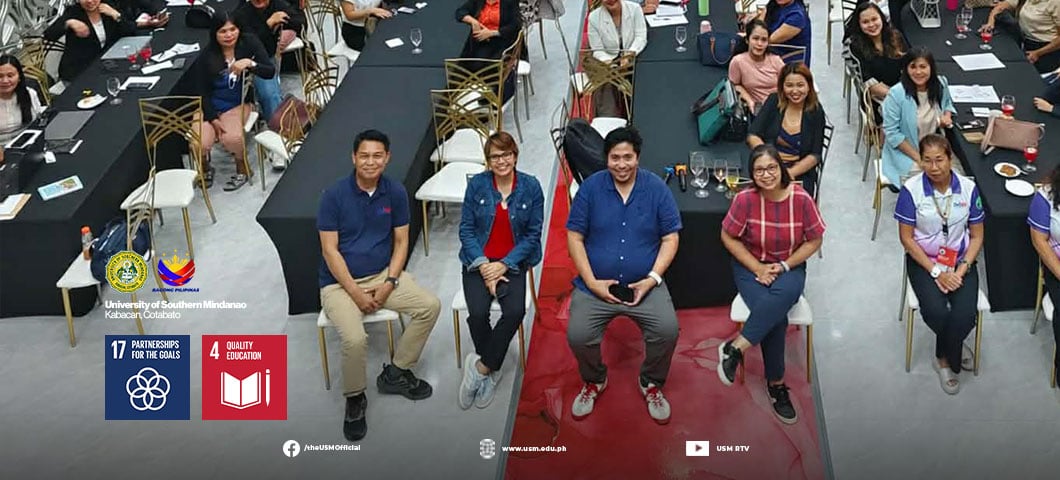
KIDAPAWAN CITY —The Department of Education–Schools Division Office (SDO) of Cotabato, in partnership with the University of Southern Mindanao, conducted a six-day intensive professional development program titled “PROJECT TOOLKIT: Transforming Key Stage 1 Reading Teachers into Master Interventionists” on September 4–9, 2026, at Park-Lay Suites, Kidapawan City.
The training—with National Educators Academy of the Philippines (NEAP) Region XII Certification No. PD-DB-2026-12-00032—was designed to strengthen the pedagogical competence of Key Stage 1 reading teachers by equipping them with innovative, learner-centered, and curriculum-responsive teaching strategies aligned with the Revised K to 10 Curriculum.
To ensure targeted and interactive learning, the activity was split into two batches: Batch 1 on September 4–6, 2026 and Batch 2 on September 7–9, 2026.
The following USM faculty experts served as resource speakers, delivering targeted trainings and workshops across core areas of early literacy:
• Dr. Glyn B. Gabano-Magbanua led hands-on practice labs on phonological and phonemic awareness, explicit phonics using the Marungko Approach, and word work practicums.
• Dr. Lawrence Anthony U. Dollente facilitated sessions on fluency instruction (echo, choral, partner, and repeated reading), vocabulary expansion through experiential learning, and guided reading simulations.
• Dr. Anamarie B. Uyangurin conducted interactive workshops on differentiated instruction for low versus high emerging readers and hands-on running records for assessing struggling readers.
• Mr. Ezra Ivan Rey Abalos guided teachers in family engagement strategies, and the formulation of School Reading Action Plans (SRAP) for immediate classroom application.
The initiative implements the first phase of “Project REACH 12” (Regional Empowerment and Advancement for Championing Literacy and Numeracy in Region 12), which aims to leverage university expertise to improve foundational literacy and learning outcomes across the region.
Highlighting the practical impact of the training, one participant noted, “We commend how organized and informative the presentations are. We know that some of the interventions are challenging, but we hope to use them so that later on, we can see improvements in the children.”
The initiative will continue to expand across other divisions in Region 12 to advance quality basic education.