
USM Recognizes Researchers, Innovators Through PRAISE Awards
September 21, 2026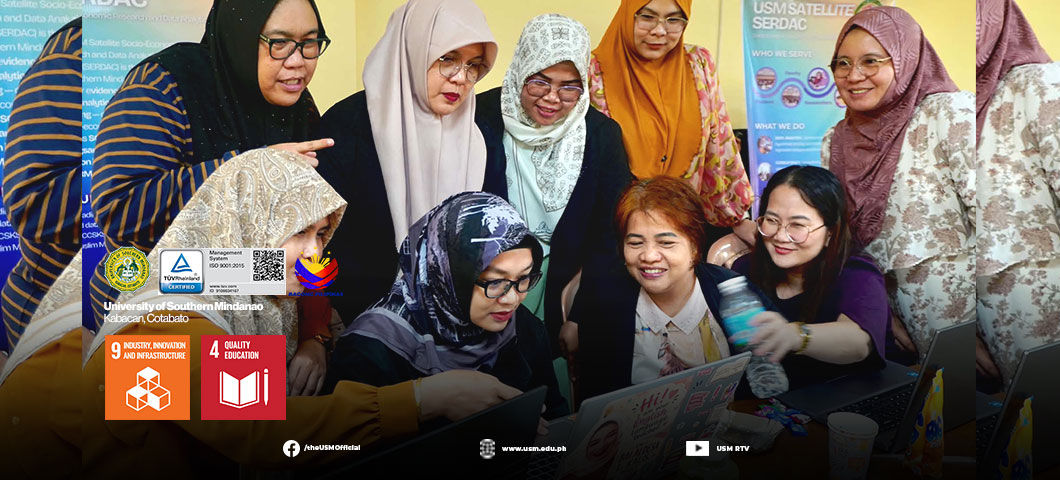
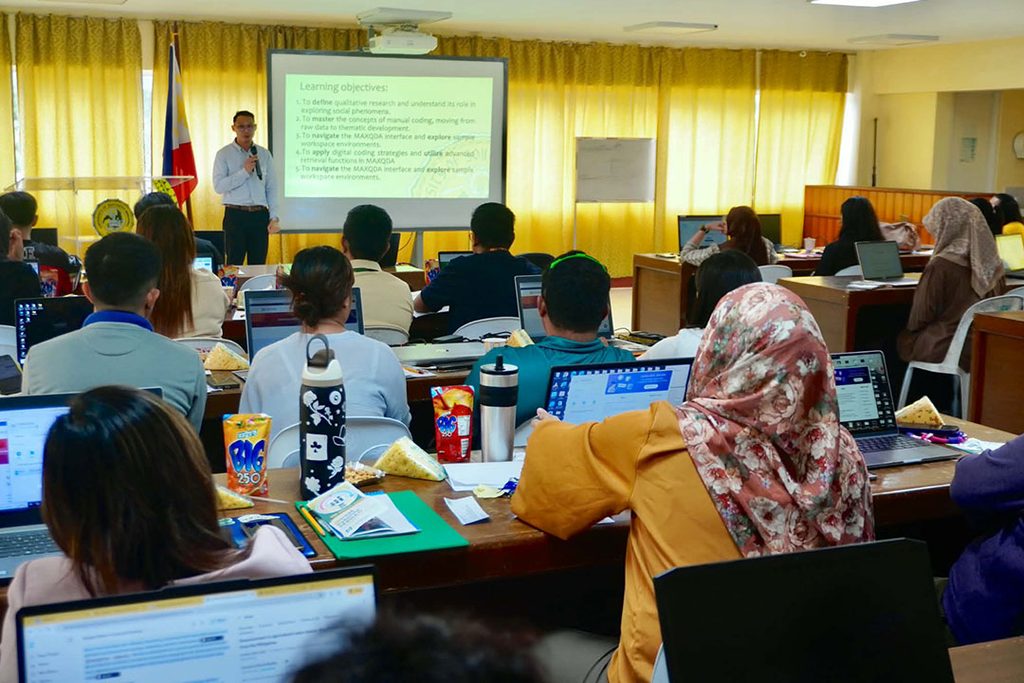
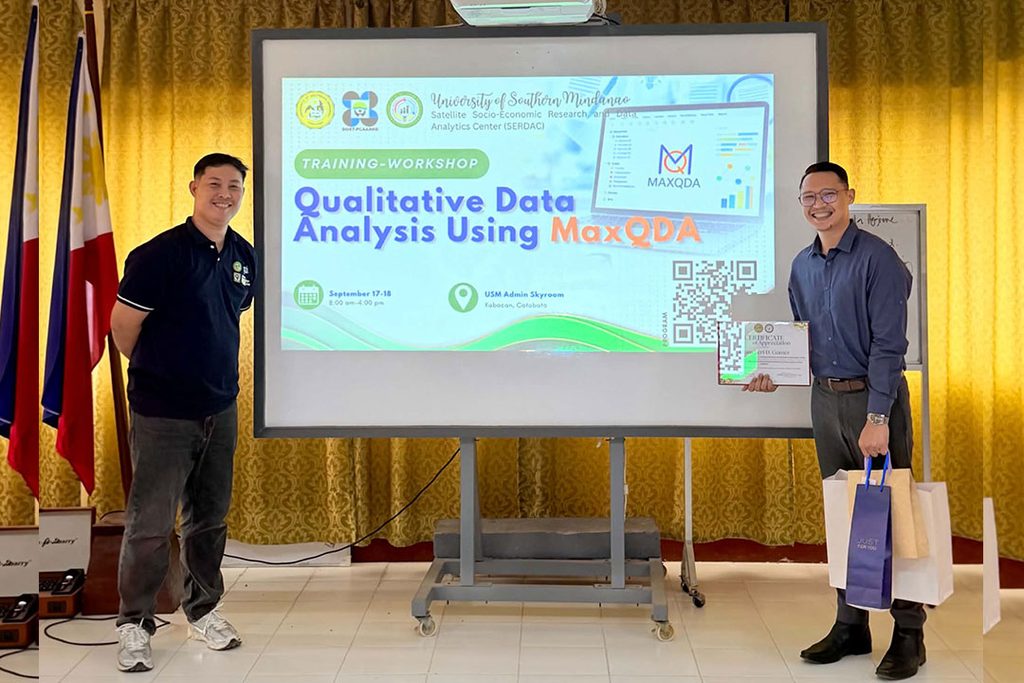
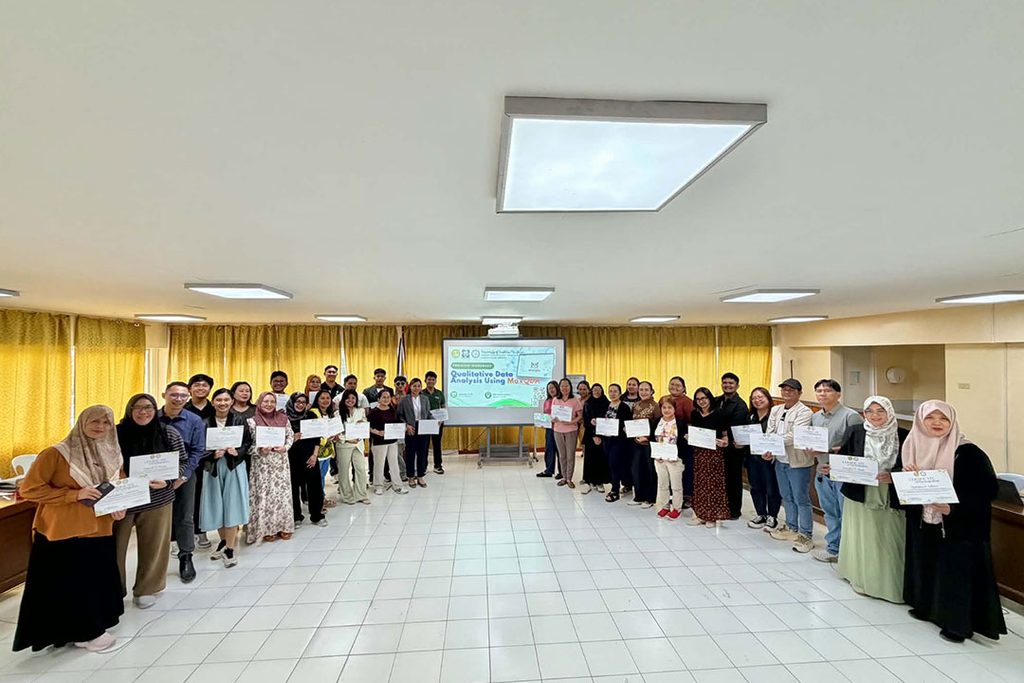
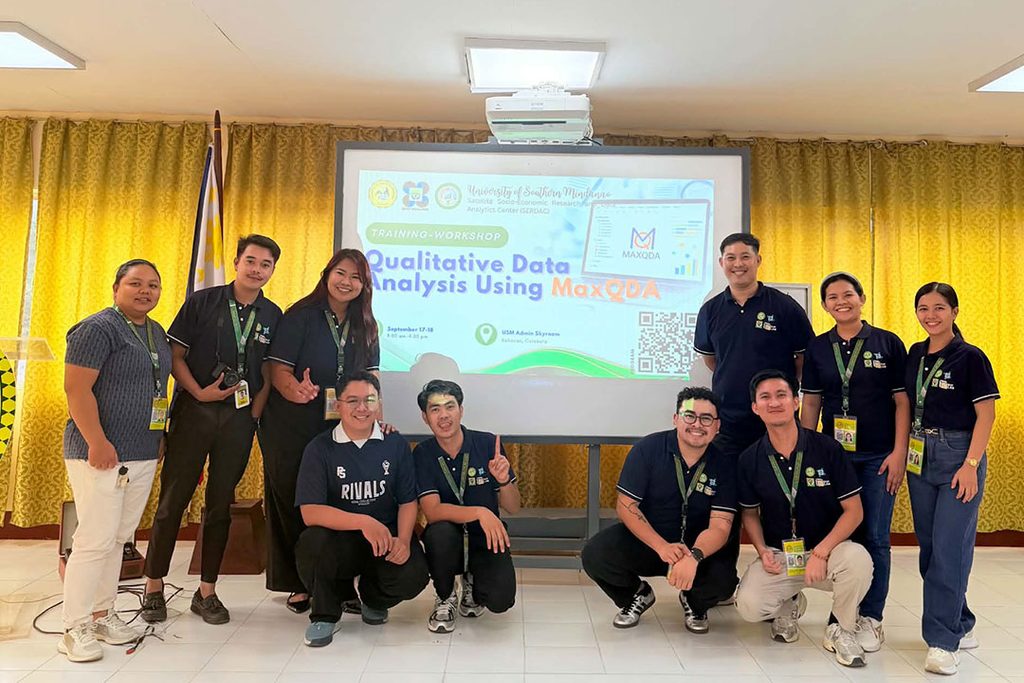
Researchers and professionals from Davao Region, South Cotabato, Cotabato, Sultan Kudarat, Sarangani, and General Santos City (SOCCSKSARGEN Region), and the Bangsamoro Autonomous Region in Muslim Mindanao (BARMM) learned how to organize, code, and analyze qualitative data using MAXQDA during a two-day training-workshop held September 17–18, 2026, at the University Skyroom, Administration Building, University of Southern Mindanao (USM), Kabacan, Cotabato.
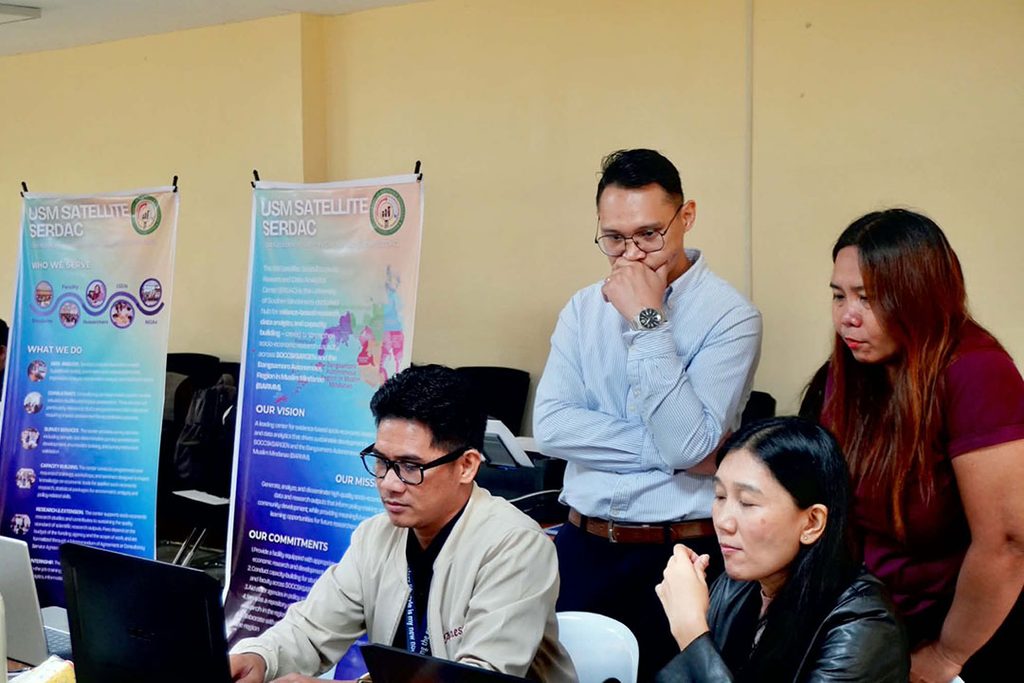
The training-workshop on Qualitative Data Analysis Using MAXQDA — a computer software program used for qualitative and mixed methods data analysis, was organized by the USM Satellite Socio-Economic Research and Data Analytics Center (SERDAC) to develop participants’ practical skills in handling qualitative research data.
Dr. Romiel John P. Basan, Head of the USM Satellite SERDAC, opened the activity and highlighted the Center’s efforts to make research and data analytics training accessible to researchers inside and outside USM. He also stressed the importance of qualitative analysis in understanding experiences, perspectives, processes, and contexts that go beyond what numerical data can show.
Dr. Debbie Marie B. Verzosa, Vice President for Research, Development, and Extension (VPRDE), expressed support for the activity and highlighted the need for researchers to continuously improve their research methods as institutions increasingly turn to evidence to guide research, policy, and development initiatives.
Meanwhile, Dr. Frans Bert Gomez, Head of the Multicultural IP Center for Research, Education and Development (MIPCRED), served as the resource person and guided the participants on the principles and practical application of qualitative data analysis using MAXQDA.
The training emphasized that while digital tools can make qualitative data analysis more manageable, researchers still need to carefully and systematically interpret their data.
The activity is part of the USM Satellite SERDAC’s ongoing programs on socio-economic research, data analysis, visualization and interpretation, and research capacity development.